
The Great Health Pact Divide: Kenya’s Court Puts US-Africa Deals Under Scrutiny
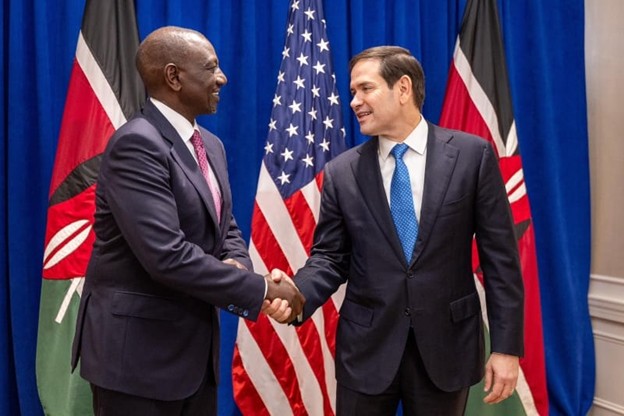
Ethiofact – A landmark series of health agreements between the United States and key East African nations has run into a significant roadblock, placing a spotlight on the delicate balance between global health cooperation and national sovereignty. While Washington has successfully signed a five-year “Framework for Cooperation in Health Sector Partnership” with both Kenya and Ethiopia, its implementation in Kenya is frozen, suspended by a High Court ruling that has sent shockwaves through diplomatic and public health circles.
The agreements, signed in late 2025, were presented as pillars of a renewed US-Africa health partnership. Their stated goals are ambitious: fortifying pandemic preparedness, upgrading laboratory and disease surveillance networks, and fostering the exchange of data and expertise to combat threats from HIV/AIDS to Ebola and future pathogens.
A Two-Track Reality: Ethiopia Proceeds, Kenya Pauses
The pact has charted two very different courses in the region.
In Ethiopia, the agreement is moving forward. The government, emphasizing the critical need for advanced biosecurity and diagnostic capacity, has championed the deal as a strategic investment in the nation’s public health infrastructure. Officials point to potential benefits like technology transfer and strengthened institutional ties with US agencies like the CDC and the Department of Defense.
In Kenya, however, the story is one of fierce public backlash and legal intervention. Following its signing, the agreement faced immediate protests from doctors’ unions (the KMPDU), civil society organizations, and opposition leaders. Critics labeled it a “secretive” and “neo-colonial” document that would commercialize Kenya’s health system, hand over sensitive biological data and samples, and undermine national sovereignty, particularly through clauses related to private sector involvement and broad “national security” termination rights.
This opposition culminated in a landmark ruling by the Nairobi High Court in early 2026. Citing a “flagrant violation of the constitutional requirement for public participation,” Justice Chacha Mwita issued an order temporarily suspending the agreement’s implementation indefinitely. The case for a permanent nullification continues.
The Core Debate: Partnership or Predation?
The stark contrast between Ethiopia’s quiet adoption and Kenya’s judicial blockade encapsulates a central debate shaping Global South engagements with major powers.
- Proponents argue these frameworks are essential for a globally interconnected world. They see them as a necessary upgrade for under-resourced national health systems facing complex biological threats. “Diseases know no borders,” noted one Addis Ababa-based health official. “This is about building a modern shield for our people.”
- Critics, empowered by the Kenyan ruling, contend the deals are asymmetrical. They fear the fine print turns sovereign public health assets into nodes in a foreign-led network, prioritizing data extraction and commercial pharmaceutical interests over local, affordable care. “It is not cooperation if one party drafts the terms in secret,” said a representative of the Kenyan petitioners. “We are not a laboratory.”
Regional Implications and the Path Forward
Kenya’s court order has implications beyond its borders. It establishes a powerful legal precedent on transparency and inclusive governance in international agreements. Civil society groups in other African nations are now closely examining their own governments’ deals with external partners through this lens.
The suspension also puts the US strategy in a bind. Its ambition to create a networked, US-anchored health security architecture in a geopolitically vital region now hinges on navigating intense local politics and legal standards, not just government-to-government diplomacy.
For now, the five-year pact proceeds on two tracks: operational in Ethiopia, frozen and constitutionally challenged in Kenya. Its ultimate fate in Nairobi, and its long-term acceptability across the continent, will depend on whether a new model of engagement can be found: one that marries genuine technical collaboration with unequivocal respect for democratic scrutiny and sovereign agency.
The courtroom in Nairobi has become an unexpected arbiter for the future of global health partnerships.
Opinions expressed by contributors are their own. Ethiofact does not endorse and is not responsible for the accuracy of any of the views expressed in the content on this site.